Topic navigation
Content
Footer links
Start
Toggle navigation
Map
Phone Book
KUnet
Dansk
Study at UCPH
Bachelor's programmes
Master's programmes
Study abroad
PhD programmes
Continuing Education
Course search
Research
Researchers and publications
PhD programmes
Research centres
News
Fluctuating coffee prices put mental pressure on Vietnamese farmers
2024.04.17
Iconic savanna mammals face genetic problems due to fences and roads
2024.04.12
After stroke: Marina Abramović to receive the Sonning Prize
2024.04.11
All news
Press service
Collaboration and innovation
Research collaboration
Innovation at UCPH
Technology transfer
UCPH Lighthouse innovation hub
Employment
Job portal
Career for young researchers
For international employees
Alumni
About UCPH
Organisation
Strategy
Facts and figures
Profile and history
Faculties
Departments
Contact
Discovery Center
Niels Bohr Institute
About us
Research
Particle Physics News
Niels Bohr Institute
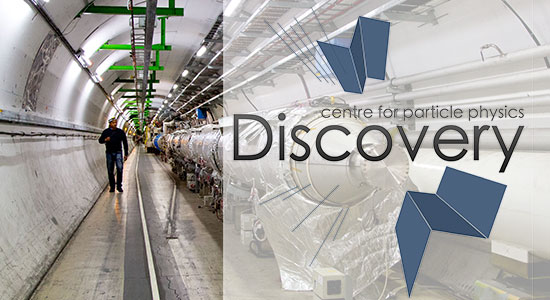
Discovery Center - Center for Particle Physics
Discovery Center - Center for Particle Physics
Discovery Center - Center for Particle Physics
Discovery Center - Center for Particle Physics
Discovery Center - Center for Particle Physics
Discovery Center - Center for Particle Physics
The Discovery center is now officially closed as the grant expired 31.12.2019.
Research
How was the universe created, which inflation scenario played out in the first split second, what happened during the quark-gluon plasma era? Research at the Discovery Center at the Niels Bohr Institute, University of Copenhagen.
About Discovery Center
About Discovery Center.
Publications
Scientific publications by the Discovery researchers at the Niels Bohr Institutet.